Home › Outdoor Living Masonry
Reliable, professional outdoor masonry features in St Petersburg, FL from St. Petersburg Masonry. Contact us today for a free on-site estimate.
St. Petersburg Masonry provides professional outdoor masonry features throughout St Petersburg, FL, Florida and the surrounding area. Our licensed, insured crew delivers safe, clean, on-time work with a free estimate before anything begins. Call (727) 610-8068 or request your free quote.
Outdoor masonry features that fit how you actually live in St. Petersburg
Outdoor living in St. Petersburg is less about a few big parties and more about daily use in heat, humidity, and salt air. At St. Petersburg Masonry, we design outdoor masonry features that match how you really use your yard, from evening cookouts in Old Northeast to quiet coffee mornings in Greater Pinellas Point.
Instead of starting with a catalog of products, we start with a walk-through of your property and a conversation about your habits. Do you grill three times a week, or is the focus on relaxing with a book in the shade. Do you need a durable space for kids and dogs, or a low-maintenance entertainment area for adults. The answers shape whether we recommend a simple paver patio, a full outdoor kitchen, a shaded seating wall, or a combination.
Because our work is outdoors year-round, we pay close attention to sun orientation, prevailing breezes off Tampa Bay or the Gulf, and drainage patterns that change during summer storms. In many St. Petersburg yards, a patio or fire feature becomes much more comfortable if we rotate it a few degrees, add a small masonry privacy wall, or create a slightly elevated slab to avoid wet spots after heavy rain. These details are what make outdoor masonry features actually usable in our climate, not just photogenic.
Common outdoor masonry features we build in St. Petersburg
St. Petersburg Masonry focuses on a core set of outdoor masonry features that perform well in our climate and soil:
• Patios and courtyards: We install concrete pavers, clay brick, or natural stone on a compacted base that can handle the sandy soils found in areas like Shore Acres and Lakewood Estates. Joint materials are chosen to resist weed growth and ant mounds, which are common problems here.
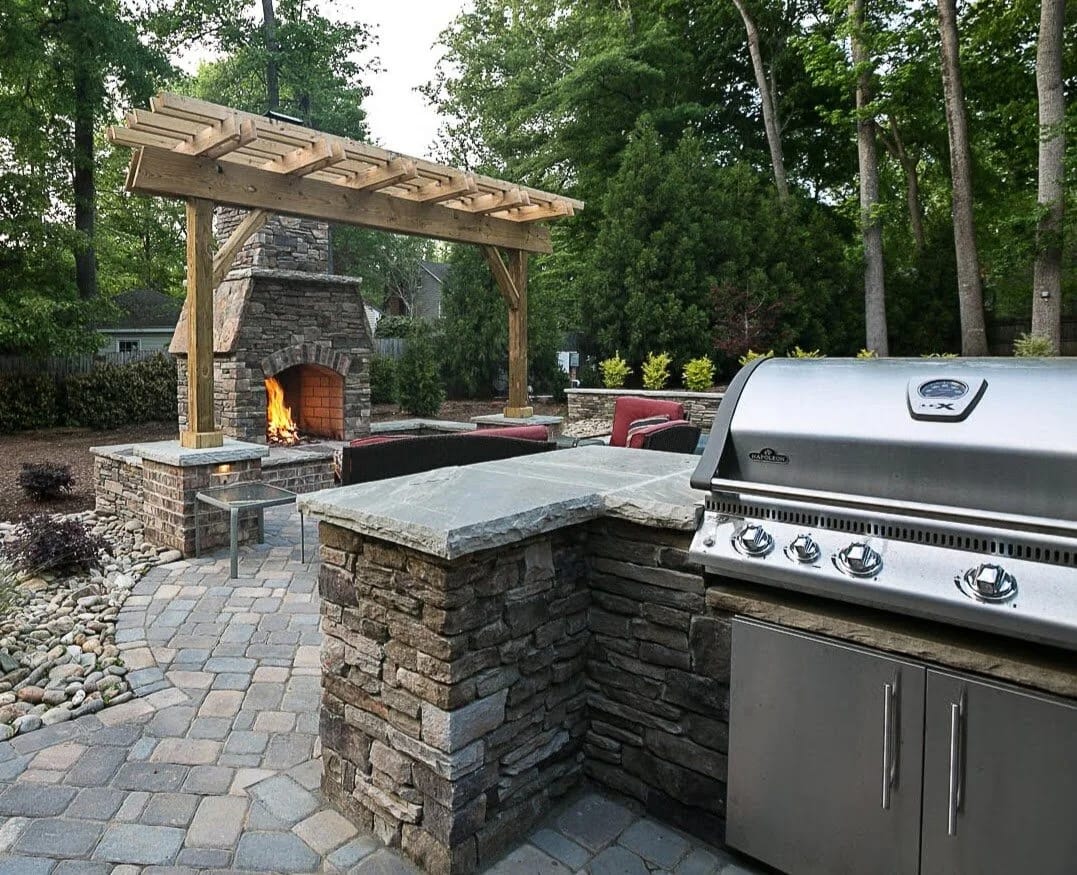
• Outdoor kitchens and grill islands: We build block or brick bases, then finish them with stucco, brick veneer, or stone. Countertops are usually granite, concrete, or porcelain that can handle UV exposure without fading. We coordinate with licensed plumbers or gas fitters when needed, and we design ventilation and clearances around the grill to reduce heat staining and smoke damage.
• Fire pits and fireplaces: Because of the Florida heat, we often recommend lower-profile fire pits or gas units that are easier to control and more comfortable to use on warm nights. We use firebrick liners and high temperature mortar inside, with decorative brick, block, or stone on the outside.
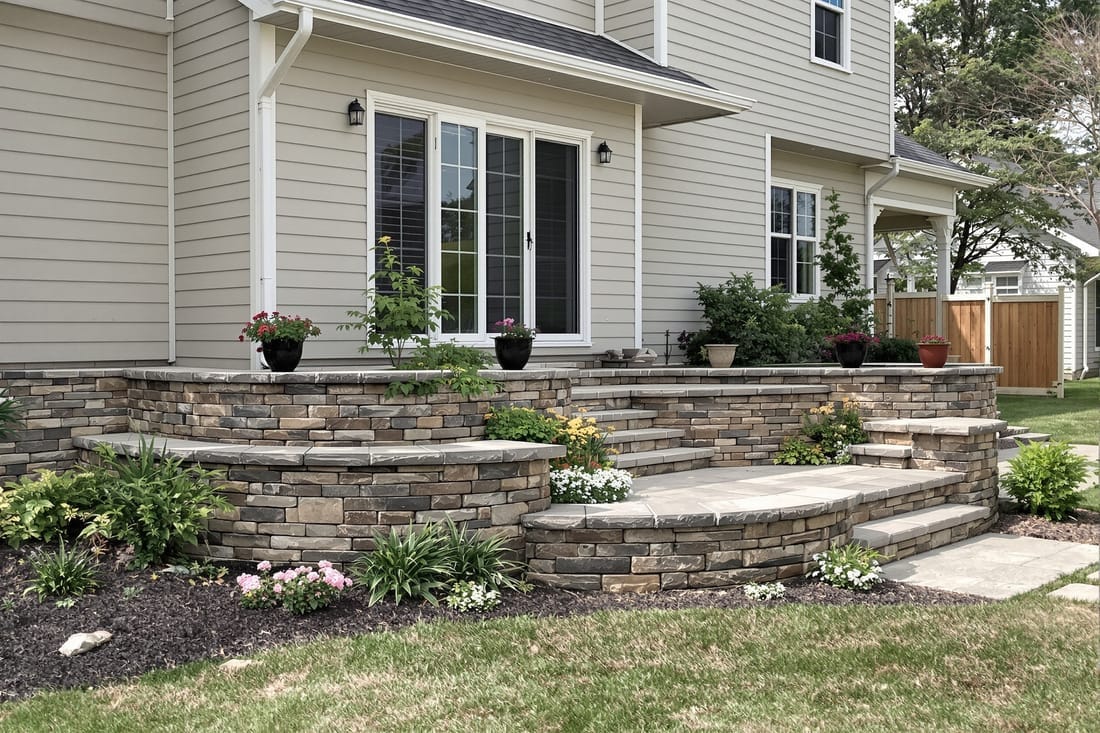
• Seat walls and planters: Masonry seating doubles as space definition in open yards. We design proper footing depth based on the exact soil conditions on your property and use capstones that do not get excessively hot in direct sun.
Every feature can be tied together with matching pavers, lighting conduits set inside the masonry, and small retaining elements to manage minor grade changes that are common in St. Petersburg neighborhoods.
Materials that survive St. Petersburg sun, salt, and storms
Not every attractive material is the right choice for our coastal environment. At St. Petersburg Masonry, we focus on options that handle salt air, intense UV, and heavy summer downpours.
For patios and walkways, we often recommend concrete pavers rated for vehicular use, even for pedestrian areas, because they are denser and less likely to chip. Lighter colors stay cooler in bare feet and reflect the afternoon sun, which is important in open yards in places like Meadowlawn and Pasadena. Where clients want a natural look, we specify shellstone, travertine, or certain granites rather than softer, flakier stone that can break down faster.
For vertical features such as outdoor kitchens, fireplaces, and seat walls, we usually construct a concrete block core on a reinforced concrete footing, then apply brick or stone veneer. This approach gives strength and stability in our sometimes soft and shifting soils. If you live closer to the water or in a flood-prone area, we may suggest additional rebar, deeper footings, or extra weep paths so trapped water can escape after a storm.
We also discuss sealers honestly. In our climate, clear sealers on pavers often need reapplication every 2 to 3 years. Some clients prefer a natural, unsealed look to avoid ongoing maintenance. We show you sample sections that have been exposed outdoors so you can see how materials will age before you commit.
How we actually build your outdoor masonry features
Our outdoor living masonry projects follow a consistent process that is adapted to your specific yard conditions.
1. Site evaluation and layout: We check for utilities, irrigation lines, and existing drainage. In many St. Petersburg yards, downspouts and neighboring properties affect how water moves. We design slopes and channel paths so water sheds off hard surfaces without running toward your house or your neighbor.
2. Excavation and base preparation: We excavate to the proper depth for the feature, typically 6 to 10 inches for patios, more for heavy structures or poor soils. The subgrade is compacted, then we install layers of crushed stone or screenings. This is crucial in sandy Florida soil, where skipping compaction leads to sunken pavers and wavy patios within a year or two.
3. Footings and structural work: For walls, kitchens, fireplaces, and raised planters, we pour reinforced concrete footings to a depth suited to your soil and the height of the structure. Block is laid in mortar with rebar tied into the footing, then filled where needed for strength.
4. Surface installation: For paver areas, we screed a bedding layer and set the pavers in a pattern that fits your space and reduces cuts at the edges. For veneer, we install lath and scratch coats when needed, then hand set each stone or brick. We pay attention to joint width and alignment so repairs are easier in the future if needed.
5. Finishing and cleanup: Joints are filled, excess mortar is cleaned off, and edges are restrained. We test grill lines, check clearances around fire features, and run water where appropriate to verify drainage. You get a walk-through where we explain how the system was built and what to watch in the first few rainy weeks.
What affects the cost of outdoor masonry features in our area
Project cost is not just about square footage. On St. Petersburg properties, several local factors drive pricing for outdoor masonry features.
• Access and logistics: Narrow side yards, fences, or limited parking can require smaller equipment or more hand work. For example, in tight lots near downtown, we may need to wheelbarrow base materials by hand, which affects labor.
• Existing conditions: If an older concrete slab is cracked or uneven, it might make sense to remove it instead of building on top. Root systems from large oaks or palms can also require root pruning and modified footing layouts so the tree and the masonry can coexist.
• Material choices: Standard concrete pavers are more affordable than imported stone or intricate patterned brick. Simple stucco finishes on outdoor kitchen bases cost less than full stone veneers. We show you clear price ranges per square foot or per feature so you can prioritize what matters most.
• Utilities and extras: Gas lines for grills, dedicated electrical circuits for refrigerators or lighting, and plumbing for sinks all add cost. We work with licensed trades, and when possible we suggest layouts that keep runs short and avoid cutting into existing slabs or driveways.
During estimating, St. Petersburg Masonry provides line item details so you can see how much each element of your outdoor living project contributes to the total and adjust the plan without losing quality in the core structure.
Problems we prevent in Florida outdoor masonry projects
Outdoor masonry in our climate faces specific challenges. We plan for these early so you are not dealing with headaches a year after the work is done.
Standing water on patios is a common complaint. Our crews set proper slope away from structures and toward planned drainage paths. Where yards are very flat, we integrate catch basins or channel drains and connect them to safe discharge points. This is especially important given the intense afternoon storms in late summer.
Loose or shifting pavers often come from poor base prep. We compact in thin lifts and use edge restraints that can handle heat expansion and the occasional vehicle load on driveways or parking pads. In shaded, damp areas, we discuss joint sand and polymer options that reduce weed growth and ant activity without turning joints into a hard, slick surface.
For features involving fire and heat, we prevent cracking by separating firebox components from decorative faces and using proper expansion joints. We also set clear safety distances from fences and overhangs, which is important in neighborhoods with small lot lines.
When salt air is a factor closer to the waterfront, we choose reinforcement and hardware that resist corrosion and recommend cleaning schedules to remove salt deposits. This type of planning helps your outdoor masonry features look good longer and reduces the need for early repairs.
What to know before hiring an outdoor masonry contractor in St. Petersburg
Before you commit to any outdoor living masonry project, there are a few questions you should ask any contractor working in St. Petersburg.
Ask how they handle drainage and base preparation. A contractor who cannot explain soil compaction, slope, and water exit paths is taking chances with your investment. Ask to see a recent patio or outdoor kitchen they built after a heavy rain if possible.
Request specific material brands or types, not just generic "pavers" or "stone." At St. Petersburg Masonry, we list exact paver lines, thicknesses, and color blends, and we tell you how hot they get in full sun and how they tend to weather in our environment.
Confirm permitting needs. Many fire features, permanent outdoor kitchens, and structural walls require permits or at least adherence to local codes. We handle the paperwork for our projects and time masonry work around likely inspection dates and seasonal rain patterns.
Finally, discuss maintenance. Outdoor masonry does not need daily attention, but it does need occasional cleaning, sand refilling, or resealing. We provide a simple care plan tailored to your specific materials so you know exactly what to expect in the first year and beyond, and we remain available if you want us to handle periodic tune-ups of your outdoor masonry features.