Home › Commercial Stone Masonry
Reliable, professional commercial stone masonry in St Petersburg, FL from St. Petersburg Masonry. Contact us today for a free on-site estimate.
St. Petersburg Masonry provides professional commercial stone masonry throughout St Petersburg, FL, Florida and the surrounding area. Our licensed, insured crew delivers safe, clean, on-time work with a free estimate before anything begins. Call (727) 610-8068 or request your free quote.
Commercial Stone Masonry in St. Petersburg That Is Built to Last
If you manage or own commercial property in St. Petersburg, you already know our climate is tough on exterior materials. Between salty air off Tampa Bay, heavy summer rains, and constant sun, stone has to be selected and installed with real care. That is where St. Petersburg Masonry comes in. Our commercial stone masonry services are focused on durable, low‑maintenance solutions that still look sharp for customers, tenants, and visitors.
We work with property managers, general contractors, and business owners on everything from hotel entries and restaurant patios to office facades and retail signage. Before we talk products, we start with how your property is actually used. High‑traffic entry? Wind‑blown corner near the waterfront? Shaded courtyard that stays damp after storms? Those details affect which stone, anchoring system, and joint materials we recommend.
Because we live and work right here in St. Pete, we know which stones hold up to local conditions and which ones stain, chip, or pop loose after a few seasons. Our goal is commercial stonework that does not just look good on opening day, but is still straight, tight, and safe when you pull the 10‑year maintenance records.
How Our Commercial Stone Masonry Process Works
Commercial projects need structure, clear communication, and documentation. When you call St. Petersburg Masonry about commercial stone masonry, we walk you through a straightforward process so there are no surprises for you or your GC.
1. Site walk and assessment: We meet on site to look at existing conditions, structure, drainage, and access. For new builds, we review plans and details with your architect or engineer. We check substrate type (concrete block, poured concrete, steel framing, or CMU), wall heights, and any movement joints, since those control how we anchor the stone.
2. Design and material recommendations: Based on your budget, maintenance expectations, and brand image, we propose specific stone products and systems. That might mean full‑bed stone veneer on a hotel lobby wall, thin stone panels on a multi‑story facade, or natural stone caps and cladding on site walls around a retail center. We bring real samples so you can see how colors read in Florida light, not just in a catalog.
3. Detailed proposal and schedule: Our proposals break down scope, square footage, material type, labor, and expected timeline. For operating businesses, we often phase work to keep doors open, for example, working on one entry at a time or scheduling loud work before opening hours.
4. Substrate prep and layout: Before a single stone is set, we clean and prepare the substrate, install moisture barriers and flashing where needed, and snap layout lines. For veneers over CMU or concrete, we verify bond strength and install lath or anchoring hardware where required by the system.
5. Installation and joint work: Stones are set using the system specified for the job, such as full‑bed mortar, mechanical anchors, or thin veneer adhesives approved for our climate. We pay close attention to joint width, alignment, and weep paths so walls can breathe and shed water. Mortar type and color are chosen to match the stone and to resist staining from our frequent rains.
6. Clean‑up, sealing, and turnover: Once the stone is set and cured, we clean the face with appropriate cleaners that will not burn or etch the surface, then apply sealer where it makes sense for the material and use. You receive maintenance notes and, if requested, photos and documentation for your facility records or ownership group.
Stone Options and Design Choices for St. Pete Commercial Properties
Choosing stone for a commercial project is not only about color. In St. Petersburg, the right choice balances appearance, slip resistance, heat, and resistance to moisture and salt.
Common stone types we install include:
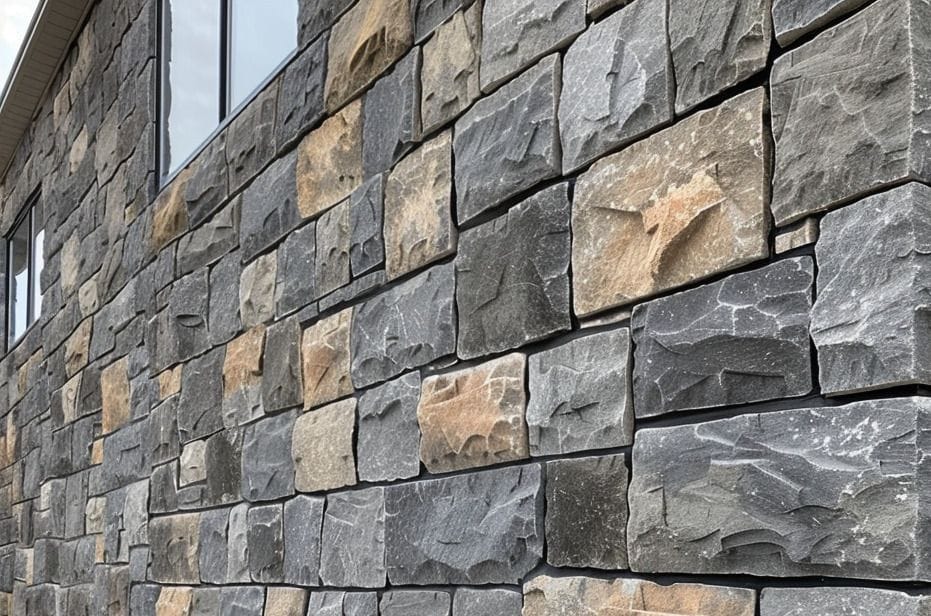
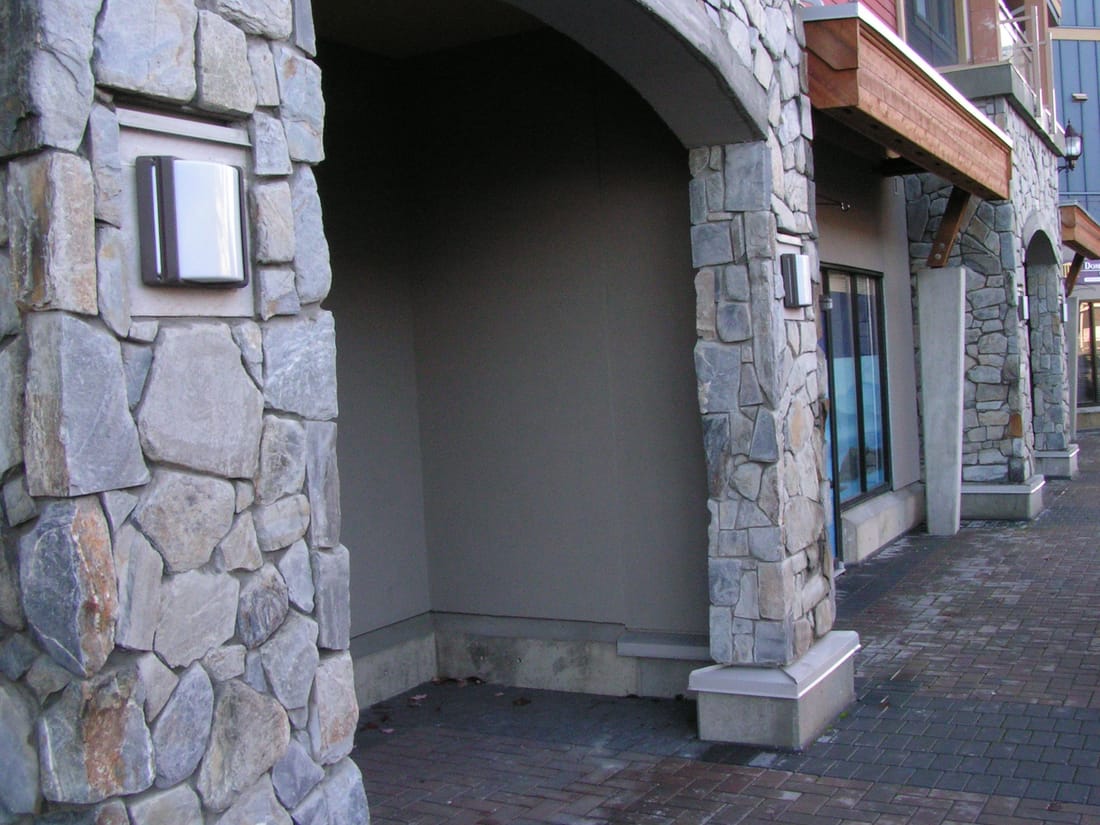
• Natural stone veneer: Limestone, granite, and some sandstones work well for storefronts, columns, and feature walls. We typically avoid very soft limestones on coastal‑exposed walls unless the owner understands the extra maintenance.
• Manufactured stone (cast stone): Ideal for branded storefronts and repeatable details like window surrounds and banding on multi‑tenant buildings. It keeps weight and costs down while still delivering a consistent look across large facades.
• Pavers and flagstone: For restaurant patios, hotel pool decks, and walkways, we look at slip resistance when surfaces are wet, how hot the stone gets in the sun for bare feet, and how easily it can be pressure washed. Lighter colors often perform better in the Florida heat.
We also help with layout decisions that affect both appearance and cost. Larger format panels or pavers can reduce labor but may need thicker substrates and more precise base prep. Irregular flagstone looks relaxed and custom for outdoor dining, but it takes more time to fit and joint tightly, which affects the budget.
In our local projects, we often coordinate stonework with other materials like stucco, EIFS, brick, or metal panels. St. Petersburg Masonry makes sure the stone transitions are flashed and jointed correctly so you do not get water intrusion where materials meet. If you already have an architect, we follow the design intent and can suggest field tweaks that keep the look while avoiding details we know will not survive our weather.
What Drives Cost and How We Control It
Commercial stone masonry pricing is driven by several specific factors, and understanding them helps you compare bids fairly and avoid unexpected change orders.
Key cost drivers:
• Material selection: Natural stone typically costs more than manufactured stone, and full‑bed veneer is heavier and slower to install than thin veneer. Imported stones, custom cuts, or unusual finishes add cost. We will often show you a good, better, best option for the same general look.
• Substrate and structural needs: Attaching stone to solid concrete or CMU is usually more straightforward than to light‑gauge framing, which may require engineered anchors, additional sheathing, or backing. For taller facades or high‑wind areas near the water, we may need more frequent anchors or thicker stone.
• Access and phasing: If we need lifts, scaffolding, or night work to avoid disrupting your operations, labor costs reflect that. In downtown St. Pete and along busy corridors like 4th Street, logistics and staging can play a real role in pricing.
• Details and patterns: Simple running‑bond layouts with standard pieces go faster than intricate patterns, tight curves, or many small returns and openings. Custom signage in stone or integrated lighting also requires careful layout, coring, and coordination with other trades.
St. Petersburg Masonry looks for ways to keep your project on budget without cheapening the final result. For instance, on some office buildings we use a higher‑end natural stone at eye level around entries, then transition to a more economical manufactured stone or panel system above. On restaurant patios, we may recommend a modular paver pattern that installs faster but still looks custom once furniture and planters are in place.
We are upfront about any site issues that could affect cost, like poor drainage where a patio is planned or deteriorated CMU behind an old facade. By addressing those early, we avoid the kind of mid‑project surprises that drive up both timeline and budget.
Local Issues, Maintenance, and Why Experience Matters Here
Working in St. Petersburg means designing stonework to handle specific local challenges: salt, sun, rain, and high humidity. If those are not planned for up front, you end up with efflorescence (white staining), loose pieces, or moldy joints within a few seasons.
In coastal‑adjacent areas like Shore Acres, Snell Isle, or buildings with direct bay exposure, we pay extra attention to anchors, corrosion‑resistant fasteners, and sealants that will not fail quickly in salty air. We also design drainage behind veneers so water does not get trapped and push stone away from the wall. For shaded courtyards and service areas that never fully dry out, we use mortars and joint profiles that shed water instead of catching it, and we may recommend slightly wider joints for easier cleaning.
Commercial clients frequently ask how much maintenance their stonework will need. For most facades and site walls, a periodic low‑pressure wash and spot cleaning of stains is enough. On restaurant patios and high‑traffic walkways, you may want annual cleaning and resealing, especially where food and drink spills are common. We always match sealers to the specific stone; a one‑size‑fits‑all sealer can leave some surfaces blotchy or slippery.
If you already have stone installed and it is failing, St. Petersburg Masonry can diagnose issues like hollow spots behind veneer, cracked caps that let water into walls, or displaced pavers that trip guests. Often we can repair and reinforce instead of ripping everything out, which saves money and downtime.
When you involve us early in planning, we can coordinate with your architect, structural engineer, and GC so the stonework is properly supported and documented for permitting in Pinellas County. That coordination, plus our experience with real buildings in our climate, is what makes commercial stone masonry perform well here over the long term.