Home › Masonry Restoration and Historic Preservation
Reliable, professional historic masonry restoration in St Petersburg, FL from St. Petersburg Masonry. Contact us today for a free on-site estimate.
St. Petersburg Masonry provides professional historic masonry restoration throughout St Petersburg, FL, Florida and the surrounding area. Our licensed, insured crew delivers safe, clean, on-time work with a free estimate before anything begins. Call (727) 610-8068 or request your free quote.
Masonry restoration for St. Petersburg’s climate and building styles
St. Petersburg masonry buildings deal with salty air, intense sun, and sudden downpours. That combination speeds up mortar decay, efflorescence, and brick spalling. At St. Petersburg Masonry, our historic masonry restoration work starts with understanding how those factors have affected your specific structure, not just the visible cracks.
We look at when your building was constructed and what type of masonry system it uses. In St. Petersburg this often means early 1900s brick storefronts, 1920s Mediterranean Revival homes with stucco over masonry, and mid‑century concrete block with decorative brick or stone. Each one needs a different restoration approach. Matching the original materials and methods is the only way to protect both appearance and structural integrity.
Our team focuses on preserving original masonry wherever practical, instead of replacing it by default. We repair bricks, block, stone, and historic stucco, then carefully blend in new work so it does not look patched or obviously modern. The goal is for your building to look like it has always been well cared for, not like it just had obvious repairs done last year.
How we evaluate historic masonry before any work begins
Accurate diagnosis is the most important part of historic masonry restoration. We start with a full visual survey of the walls, foundations, chimneys, parapets, and decorative details. In St. Petersburg we pay close attention to salt exposure on coastal-facing elevations and sun-damaged south and west walls, since these areas usually fail first.
We document open joints, cracks, bulging or out-of-plane walls, loose or powdery mortar, and areas of moisture staining. If needed, we take small mortar samples and send them for analysis so we can match lime content, color, sand size, and hardness to the original mix. Using a mortar that is too hard is a common mistake that traps moisture in historic brick and causes more damage, especially in our humid Gulf Coast conditions.
Moisture investigation is critical here. We check roof edges, flashings, window sills, and ground drainage. Many St. Petersburg buildings have rising damp from high water tables or misdirected downspouts, which drives salts into the masonry and creates white efflorescence and surface flaking. Fixing only the surface without solving the moisture source will waste your money, so we discuss all contributing issues before recommending a restoration plan.
Typical restoration methods we use on historic brick, block, and stone
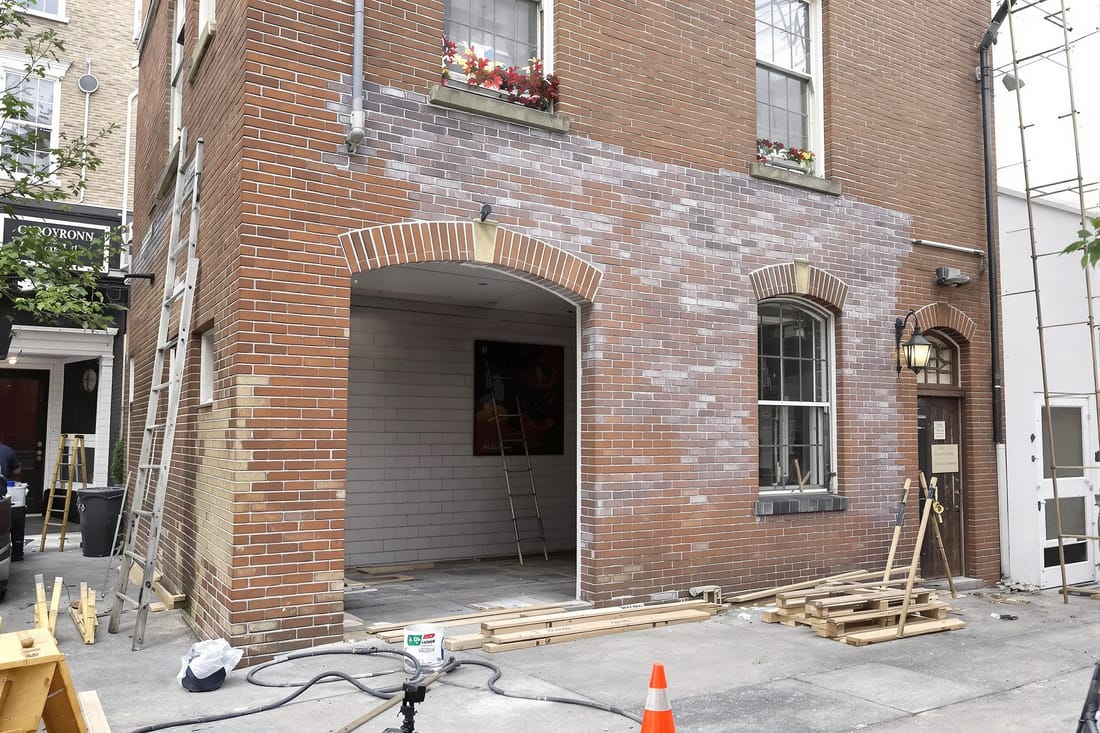
Once the building is evaluated, St. Petersburg Masonry selects specific restoration methods based on age, condition, and budget. For many local brick and block buildings, repointing is the core task. We carefully grind or hand rake deteriorated mortar from the joints to a proper depth, clean the joints, then install a compatible replacement mortar. The mix and tooling profile are matched to your original so the work is structurally sound and visually consistent.
For damaged bricks or stone units, we decide whether to repair or replace. Light spalling or chipped corners can often be repaired with mineral-based patching compounds that are vapor permeable, which is important in our humid climate. Severely fractured units are removed and replaced with salvaged or new units that match size, color, and texture. We source from regional suppliers and, when possible, recover bricks from less visible areas of your own building to keep the facade uniform.
Historic stucco over masonry, common in Mediterranean Revival homes around Old Northeast and other neighborhoods, is treated differently. We cut out failed sections to sound material, stabilize the edges, then rebuild using multi-coat stucco that matches the original aggregate and finish texture. For decorative details such as sills, cornices, and banding, we use templates and profiles taken from existing elements so the repaired sections maintain the original design language.
Cleaning, waterproofing, and protecting historic masonry in Florida weather
Cleaning historic masonry in St. Petersburg requires restraint. Many older buildings have soft fired brick or lime-based mortar that will not tolerate aggressive methods. We start with the least aggressive approach: low-pressure water rinsing and gentle detergents designed for masonry. For biological growth like mildew and algae, common on shaded Gulf Coast walls, we use specialty cleaners that kill spores without etching the surface.
We avoid harsh sandblasting or high-pressure washing that can strip the fired face off brick or open up the pores of stone. If paint or heavy staining must be removed, we select chemical strippers formulated for historic masonry and test them on small sections first. The goal is always to remove contaminants while keeping the original surface intact.
For protection, we sometimes recommend breathable water repellents. In St. Petersburg’s climate the product must let water vapor escape while shedding rain and wind-driven salt spray. We only use penetrating sealers, not film-forming coatings, on historic brick and stone. For below-grade walls or areas with chronic splash-back, we may integrate new flashings, drip edges, and improved drainage rather than relying on sealers alone. Long-term durability comes from managing water, not simply coating the surface.
What affects cost and timeline for historic masonry restoration
Costs for historic masonry restoration in St. Petersburg vary based on several predictable factors. Access is one of the largest. Two-story storefronts on busy Central Avenue with limited sidewalk space may require special scaffolding or lift equipment and coordination with the city. Single-story homes with clear yard access typically cost less per square foot for similar work.
The amount of hand labor required is another major driver. True repointing, where we remove old mortar to the proper depth and match historic profiles, is slower than simply smearing new mortar over old joints. If you own a designated historic property or want to maintain resale value, the slower, correct method is worth the investment.
Material compatibility also plays a role. Soft lime-based mortars and custom color matches cost more than generic bagged mortar but are safer for older brick. Salvaged or custom-fabricated masonry units for ornamental work can add time and cost, but they are sometimes the only way to preserve a building’s character. Before we start, St. Petersburg Masonry provides a clear written scope that separates essential structural repairs from optional aesthetic upgrades so you can set priorities if budget is tight.
Florida weather can affect scheduling. Afternoon storms, hurricane season, and high humidity all influence curing times for mortar and stucco. We plan work phases and protection measures around typical local weather patterns so your restoration is not compromised by sudden rain or prolonged damp conditions.
What St. Petersburg property owners should ask before hiring a restoration mason
Historic masonry restoration is specialized work, and not every masonry contractor in St. Petersburg focuses on it. When you interview companies, ask for examples of projects on buildings of similar age and construction type, not just new brickwork or paver patios. St. Petersburg Masonry routinely shares before and after photos and explains exactly what methods we used and why.
You should also ask how they match historic mortar. A qualified restorer will talk about test panels, sample analysis, or at least trial mixes on site. If a contractor plans to use the same premixed mortar they use on new block homes, that is a red flag for older brick buildings. For coastal or bayfront properties, ask specifically about past work in salt-laden environments and what they do to manage ongoing salt exposure.
Clarify whether the contractor is willing to coordinate with historic preservation guidelines if your property falls under local or state review. We are familiar with typical expectations for maintaining original fabric and appearance and can help you navigate what is required versus what is recommended. Finally, insist on a detailed written proposal that defines the areas to be addressed, the methods to be used, and any assumptions about hidden conditions. That way you can compare bids based on substance, not just a single bottom-line number.